
This 16 year old young man came to the Charlotte Gynecomastia Center after an impressive and intentional 71 pound weight loss. While the weight loss significantly improved his health and overall body shape, his chest did not change in the way he hoped.
From a young age, he dealt with persistent gynecomastia that became more noticeable during adolescence. Even after losing weight, excess breast tissue remained. The chest continued to project forward, especially around the nipple area, creating a shape that felt out of place on his leaner frame.
Since middle school, he relied on loose clothing and compression shirts to hide his chest. Activities that involved removing his shirt, such as swimming, sports, or time at the beach, caused anxiety rather than enjoyment. For someone his age, these limitations carried a social and emotional weight that extended well beyond appearance.

Understanding Gynecomastia After Weight Loss in Teens
Weight loss can reduce fatty tissue in the chest, but it does not reliably eliminate glandular breast tissue. In younger patients, gynecomastia that begins during puberty often persists even after major changes in body weight.
In this case, weight loss revealed additional challenges. Stretch marks were present across the chest and around the nipple area, a sign that the skin had been significantly stretched during periods of higher weight. Despite this, the overall skin quality remained relatively good due to his age.
This combination created multiple possible treatment paths, each with different tradeoffs.
Reviewing Surgical Options and Priorities
Several options were discussed for treating gynecomastia after significant weight loss.
One option involved removing skin with a horizontal incision across the chest. While effective, this approach leaves a visible and permanent scar, which can be especially concerning for younger patients.
Another option involved using Renuvion to tighten the skin internally. This can be helpful in certain cases, but may not be necessary if skin elasticity is still adequate.
The third option focused on excision of fatty and glandular gynecomastia tissue only, without skin removal or skin tightening technology.
The most important factor in deciding the approach was the patient’s priority. He wanted improvement without creating new reasons to feel self conscious. Visible scars were a major concern.
Why Tissue Excision Alone Was Chosen
After careful evaluation, excision of gynecomastia tissue alone was selected. Although there was some skin laxity and visible stretch marks, his age and skin quality suggested that the chest could adapt over time once the underlying tissue was removed.
This approach required restraint. Removing too much tissue could risk contour irregularities or worsen skin appearance. Removing too little would leave persistent fullness.
The goal was not perfection in the operating room, but improvement that would continue as healing and normal activity resumed.
Surgical Technique and Scar Placement
The procedure focused on removing both fatty and glandular breast tissue through a discreet incision placed along the inferior border of the areola. This location allows access to the underlying tissue while keeping scars hidden within natural color transitions of the skin.
By avoiding skin excision, the chest was allowed to contract naturally over time. This approach minimizes visible scarring and preserves options for the future if additional treatment is ever needed.
Early Healing and Functional Recovery
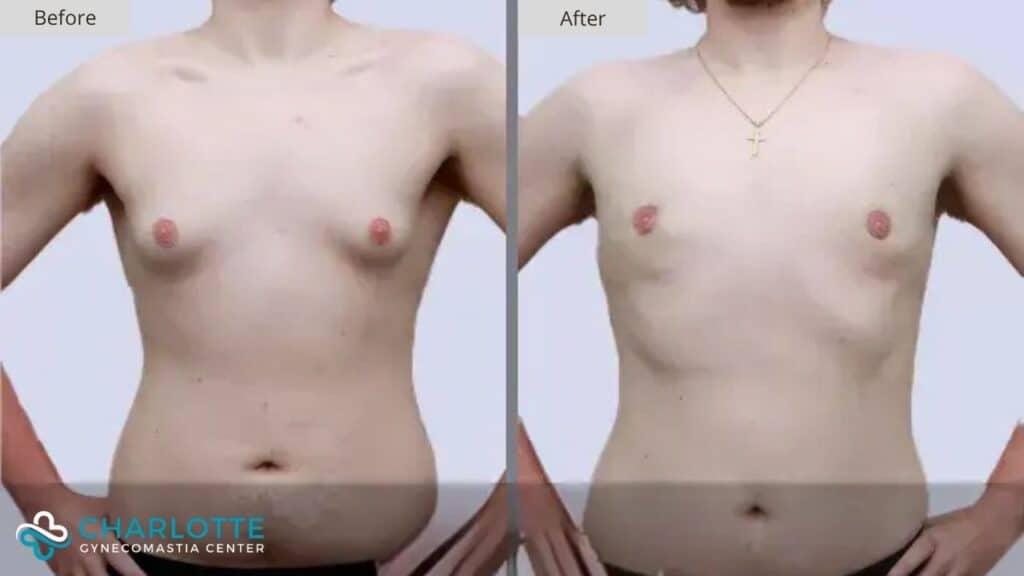
At three months after surgery, the patient’s weight remained stable, allowing for a clear assessment of results. The chest appeared flatter and more proportionate to his frame. The nipple projection seen before surgery was no longer present.
The stretch marks remained visible, which is expected, but they no longer drew attention to excess breast tissue. Instead, the chest appeared consistent with a typical adolescent male chest after weight loss.
Importantly, the scars were difficult to see. Positioned along the lower edge of the areola, they blended naturally with surrounding skin.
Emotional and Lifestyle Changes After Surgery
One of the most meaningful changes occurred outside of the physical results. For the first time in years, the patient felt comfortable without a shirt.
He was able to:
- Participate in sports without layering clothing
- Spend time at the pool and beach without anxiety
- Move freely without constant awareness of his chest
These changes mattered deeply at his age, where social experiences play a large role in confidence and self image.
Why Less Can Be More in Younger Patients
This case highlights an important principle in gynecomastia surgery, especially for teenagers. More aggressive correction is not always better.
In younger patients with moderate skin laxity and good elasticity, allowing the body to adapt after tissue removal can produce natural results without permanent scars. Growth, muscle development, and normal activity often continue to improve chest contour over time.
By choosing a conservative approach, this patient avoided unnecessary scarring while still achieving meaningful improvement.
Visual Results and Long Term Expectations
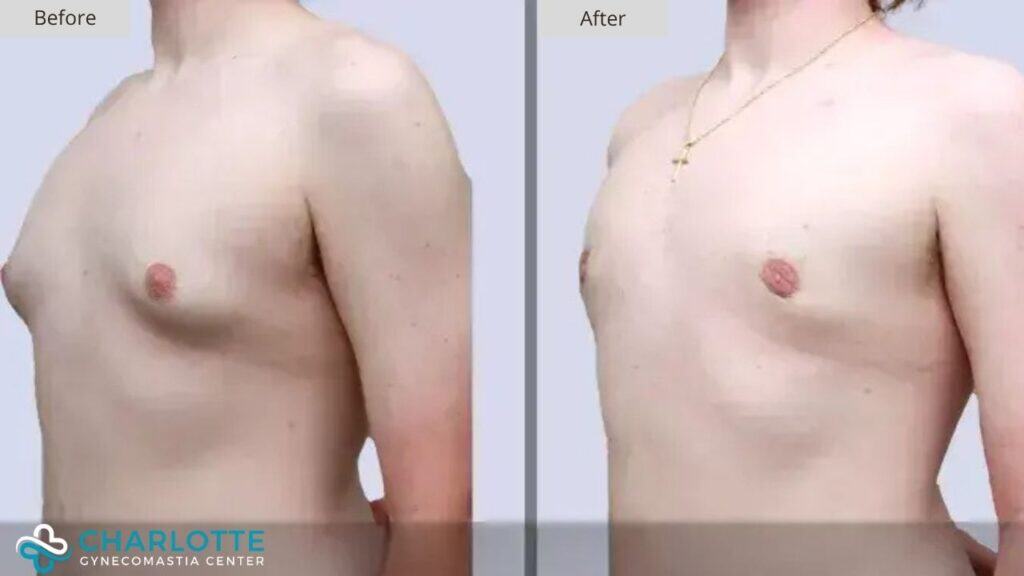
The before and after surgery images show a clear difference in chest shape from both front and side views. The chest no longer has the rounded, feminine appearance seen before surgery. Instead, it blends naturally into the torso.
Since he is still growing, continued muscle development may further enhance the result. If additional tightening or refinement were ever needed, options would remain available.
For now, the focus was on restoring comfort and confidence during an important stage of development.
Regaining Freedom at a Pivotal Age
For this young man, gynecomastia surgery was not about cosmetic perfection. It was about removing a barrier that had followed him through formative years.
Three months after surgery, with the same body weight and a markedly different outlook, he feels free to enjoy activities that once felt out of reach. The decision to use a restrained and scar conscious approach allowed him to move forward without visible reminders of surgery.
This case demonstrates how individualized planning and respect for patient priorities can deliver results that matter where it counts most.