
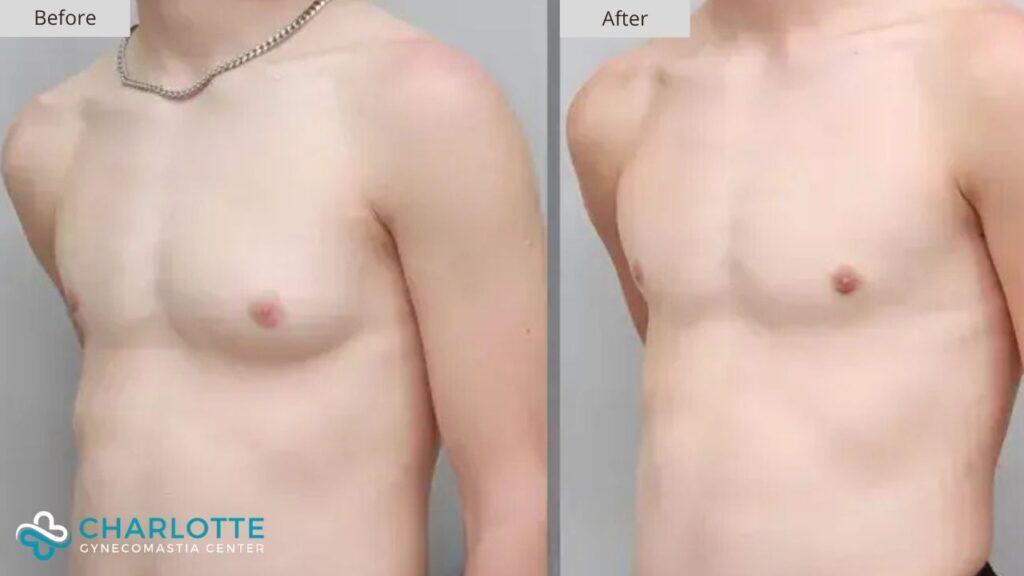
This 13 year old young man came to the Charlotte Gynecomastia Center with a very specific and distressing concern. He had developed gynecomastia on the left side of his chest only. The right side of his chest appeared normal and athletic, while the left side showed clear breast development.
He was physically active and athletic, which made the asymmetry more noticeable rather than less. In fitted clothing and during sports activities, the difference between the two sides of his chest was obvious.
Beyond appearance, the emotional impact was significant. He was teased in the locker room and became increasingly self conscious. He described feeling dysmorphic, fixating on the imbalance in his chest and altering how he moved and dressed to hide it.
Understanding Unilateral Gynecomastia in Adolescents
Gynecomastia during adolescence is common, and many pediatricians recommend observation until the late teenage years. In many cases, pubertal gynecomastia resolves on its own as hormone levels stabilize.
However, not all breast tissue growth in young males behaves the same way. In this patient, the tissue on the left side was clearly abnormal. It was glandular in nature rather than soft fatty tissue. The growth pattern and firmness were not consistent with transient pre pubescent changes.
The asymmetry had persisted and was progressing, making spontaneous resolution unlikely.
When Observation Is Not the Best Option
While waiting is often appropriate, it is not always the best solution. In this case, several factors supported earlier intervention.
The gynecomastia was unilateral and pronounced. The patient was already physically developed for his age. The psychosocial impact was significant and ongoing. The tissue characteristics suggested persistent glandular growth rather than temporary hormonal fluctuation.
Delaying treatment for several more years would likely prolong distress without a meaningful chance of improvement.
Surgical Goals and Considerations at a Young Age
Treating gynecomastia in a patient this young requires careful judgment. The goal was not aggressive reshaping, but restoration of symmetry and normalization of chest appearance.
Key priorities included:
- Removing abnormal glandular tissue on the left side
- Matching the contour of the unaffected right side
- Preserving normal chest development
- Minimizing and concealing scars
Since the right side was normal, no treatment was performed there. The focus was precise unilateral correction.
The Surgical Procedure and Technique
The procedure was performed through a discreet incision placed within the pigmented areolar tissue on the left side. This approach allowed direct access to the gland while keeping scars easy to conceal.
The abnormal breast tissue was carefully excised, restoring a flatter and more natural chest contour. Care was taken to preserve appropriate tissue thickness beneath the nipple to avoid depression or irregularity.
The total procedure time was approximately 90 minutes, reflecting the focused and meticulous nature of the correction.
Early Healing and Chest Symmetry
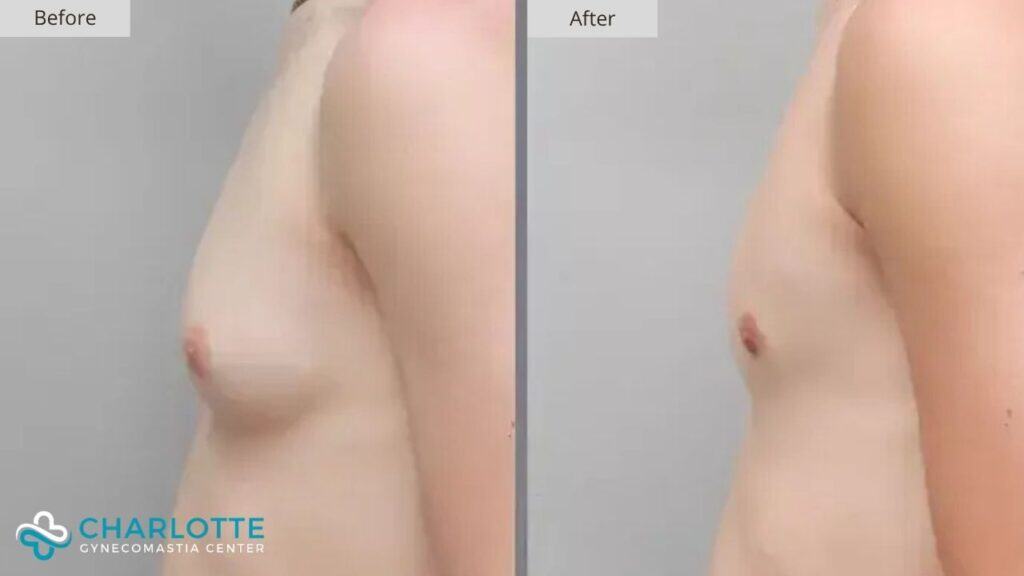
Following surgery, healing progressed as expected. Swelling was present initially but gradually resolved. As healing continued, the left side of the chest began to closely mirror the right side.
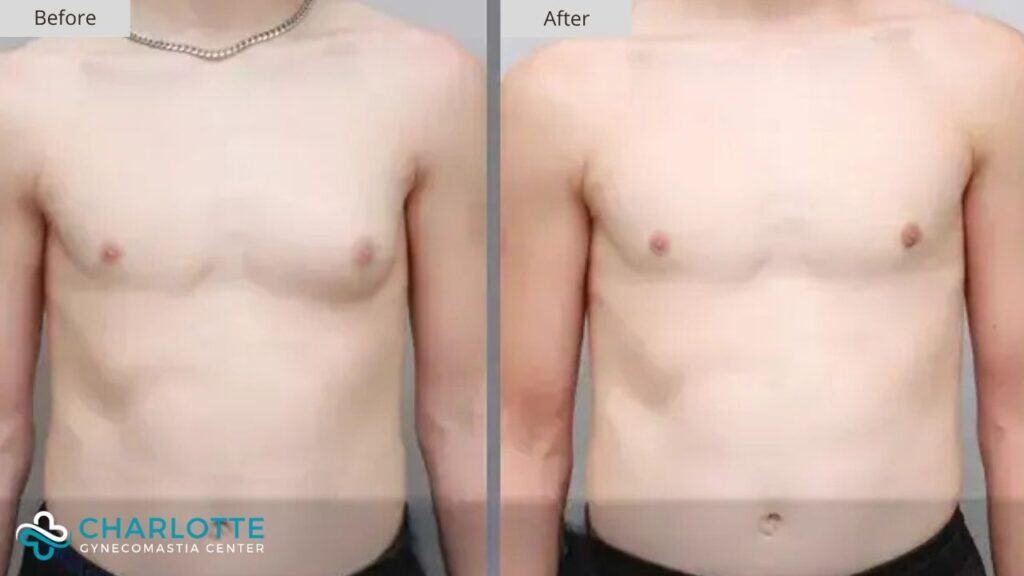
From both the front and side views, the asymmetry that previously drew attention was no longer present. The nipple projection seen before surgery had resolved, and the chest appeared balanced and proportional.
Importantly, the scars were subtle and well concealed along the edge of the areola.
Emotional and Social Impact After Correction
The most significant changes extended beyond the physical result. After surgery, the patient reported feeling more comfortable in environments that had previously caused anxiety.
He was able to participate in sports and locker room activities without fear of teasing. His posture and movement became more relaxed. The constant awareness of his chest asymmetry diminished.
At an age when peer interactions play a major role in confidence, these changes had a meaningful impact on his day to day life.
Addressing Concerns About Early Surgery
This case highlights that age alone should not be the only factor when considering gynecomastia treatment. While caution is essential, rigid age thresholds do not account for individual development patterns.
In carefully selected cases, early intervention can prevent years of unnecessary distress. The key is accurate diagnosis, thoughtful planning, and conservative technique.
By addressing the abnormal tissue without over correction, the procedure supported normal growth rather than interfering with it.
Visual Outcome and Long Term Expectations
The images after male breast reduction surgery show clear improvement in chest symmetry from multiple angles. The left side no longer appears fuller or more projected than the right.
As the patient continues to grow and develop, the corrected chest is expected to mature naturally with the rest of his body. If any future changes were ever needed, options would remain available.
For now, the result achieved the primary goal of restoring balance and confidence during an important stage of development.
Restoring Normalcy at a Formative Age
For this young athlete, unilateral gynecomastia was not a minor issue. It affected how he felt about his body and how he interacted with peers.
By carefully addressing the abnormal tissue on one side, the chest was returned to a natural and symmetrical appearance. The correction allowed him to focus on sports, growth, and daily life rather than hiding his body.
This case demonstrates how individualized evaluation and selective early intervention can make a lasting difference when observation alone is not enough.